Please Remove the Leaf Blower
The Unsung Hero of True Tales From Old Houses

The first episode of True Tales From Old Houses dropped in 2018, and it took me almost two weeks to edit. To say I didn’t know what I was doing is an understatement. I didn’t understand anything about the software I was using, audio file types, or any editing shortcuts—thus the two weeks.
As the show progressed, I slogged through editing, learning very slowly. I quickly recognized that it would never be my passion. However, I wrongly assumed that as I did it more often, I would get better (read: faster) at it, the way I did with HTML and all the other background tasks I was forced to learn over the years through my online businesses. Oh, how wrong I was.
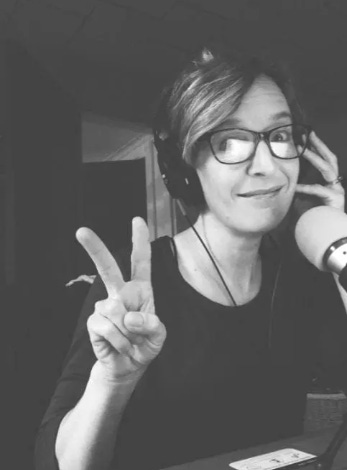
Every YouTube tutorial confused me. Text-based articles were even worse. The podcasting Facebook groups were full of people who either gatekept information or responded with some variation of, “Well, this is why people hire professionals.”
Keep in mind that these were general groups, not audio engineering groups. Anytime someone mentioned a sound issue, a swarm of audio engineers would swoop into the comments offering their services. Fair or not, their behavior did not initially endear me to people in that line of work.
So, for a while, I was determined to figure it all out myself, even though I was absolutely miserable doing it. But after a few seasons of spending 40+ hours a week on work that a professional could knock out in less than a day, I finally threw up my hands and decided to hire someone on my own dime. Audio editing was sucking the joy out of True Tales From Old Houses while I was still trying to get it off the ground.
You Get What You Pay For
Reluctantly, I turned back to the Facebook groups and put out a call for an audio engineer. Naturally, I got a flood of DMs and replies, and I was alarmed by their pricing. At that time, I had no sponsors; the show was truly a passion project that I believed could become something if I put enough into it.
Most of the people who responded handled the entire production process: taking my files, assembling the episode, making editorial decisions, mixing the sound, and publishing the finished show to my host.
Sounds great, right? Well, I had two problems with that:
I am a control freak, and I did not want someone else deciding what stayed in the show and what got cut.
Each episode would cost somewhere between $300 and $800, depending on the person. (10 episodes per season at that time = $3000 to $8000!)
Then I discovered another tier of workers: the bottom-dollar freelancers willing to do my very specific à la carte system. I would basically assemble the show myself, like an old newspaper editor laying out a paper by hand, arranging the segments, deciding the order, and building the structure. They would mix the audio and return it to me so I could publish on time.
I hired a guy out of Seattle who may or may not have been working out of his mom’s basement, and thus began a very stressful stretch of the podcast where I was never entirely sure the episode would arrive on time.
Every week was a nail-biter.
I would send the files and hear nothing. I didn’t want to hover, but eventually, I would cave and send an email.
“Did you get the files?”
“Yep.”
“Are you working on it?”
“Yeah, I’m a little behind this week, but it’s coming.”
Meanwhile, on Monday (release day)…
“Oh yeah, I’ll have it to you by the end of the day.”
Then, one week, he just ghosted me until four days past the deadline. He finally sent an email saying he’d gotten a full-time job and he had to quit.
I mean, I get it. He absolutely should have taken that job, but…ugh.
With Season Five looming, I decided to look for someone doing audio engineering as their full-time business or at least a legit side gig. I was going to be choosier and willing to pay more to stress less.
You Get What You Pay For
Determined not to let one bad experience ruin the whole idea, I went back to Facebook. Once again, I got a flood of responses. This time, I was able to immediately parse out the people I had no interest in interviewing. Then, I set up a few conversations with companies that seemed promising and more stable than Seattle Basement Guy.
That’s how I met Nick from Micme (Mic Me). He listened patiently as I explained the chaos of my previous setup and reassured me that reliable production timelines were, in fact, possible.
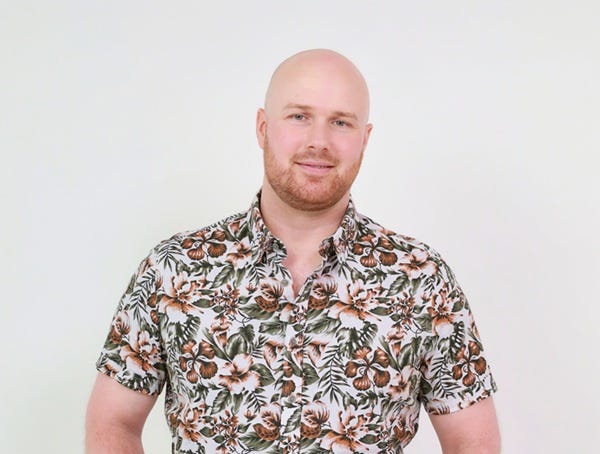
Although his company offered full-service production, he was flexible enough to meet me where I was: underfunded, overprotective, and reluctant to let go of control. Better yet, his pricing structure included additional services I could grow into later, once I was ready to unclench a little and hand over more of the process.
That was five years ago, and Nick is the kind of collaborator every creative person hopes to find: calm, reliable, talented, and unfazed by chaos.
Big Ideas
Nick has been a huge part of helping me turn increasingly ambitious ideas into reality. One of my biggest dreams when I started the show was to take it on the road and record with an audience. To make that happen, I had to invest in new equipment and then consult with Nick to figure out how to record the best possible audio for him.
That’s how the Stony Ford Sessions (Ep #65 and #66) recorded at Will and Sue Brinson’s house in the Hudson Valley eventually came together.
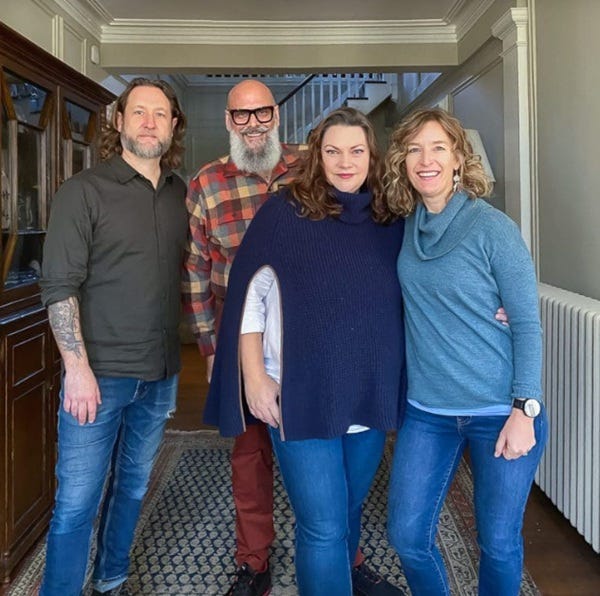
Fun Fact: That’s also the first time I met Daniel in person. We met back at Stony Ford in 2022 and recorded two more shows in front of an audience (#86 and #87). He became my co-host shortly after.
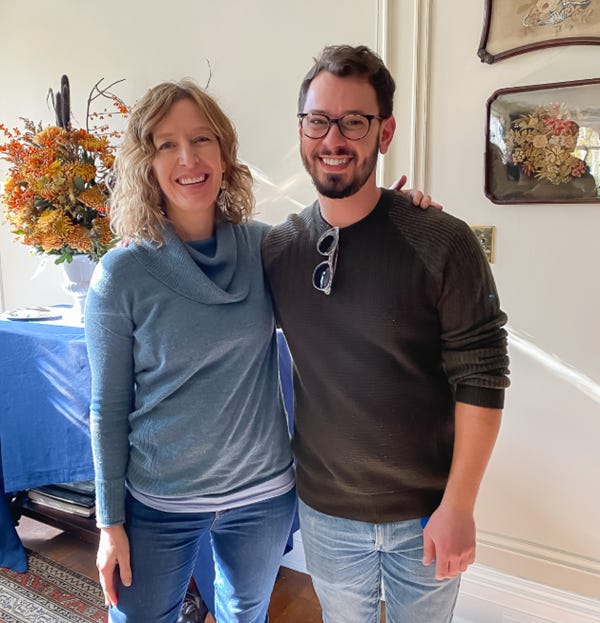
Although those remain our only live audience shows, Nick’s early encouragement completely changed the way I approached the podcast. Suddenly, field trips, travel episodes, and in-person interviews no longer felt scary. These days, I’ll record almost anywhere because I trust Nick to help me navigate whatever audio challenges come with it.
The Show Today
Over the past six years, True Tales From Old Houses has been recorded through four different computers, three different microphones, three different audio interfaces (basically the equipment that connects microphones to the computer), and two different online recording platforms. Some of those changes happened because technology wore out or evolved, but most came from my ongoing effort to improve the listening experience year after year.
If you’ve ever recorded a show with me, you know that I usually start by asking you to tell me about your pets so I can check your sound levels. Everyone loves to talk about their pet. I’ve only interviewed a handful of people who didn’t have one. In those cases, I think we ended up talking about the weather or houseplants.
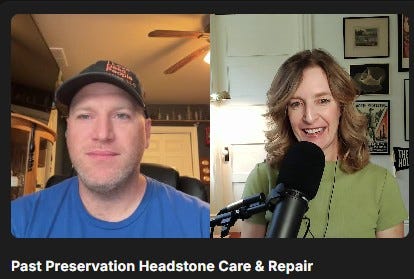
Once we get the sound quality as good as possible, I hit record, and we’re off to the races.
The interview is split into two audio tracks: one for me and one for my guest.
Later, I record a third track by myself that includes the intro, all other segments, the commercials, and the outro.
I pull all of those tracks into my audio editing software and start building the episode. I add the intro music, split the timeline where the musical transitions will go, and drop in the interview tracks, mine and my guest’s, in sequential order.
As I work, I usually do some rough content editing, especially on my solo track. I rarely edit the guest interview unless I remember something specific I want to cut.
Finally, I add the outro music.
As I work, I keep a running list of notes for Nick about transitions, edits, and anything that needs attention.
Building the episode for Nick usually takes about 2-3 hours.
Take it away, Nick!
After Nick gets the tracks, he lines up everything perfectly. He then cuts out excessive crutch words (um, uh), long pauses, and vocal stumbles. It’s pure magic.
He also cleans up mouth noises, heavy breathing, and tongue clicks. We’re all human, and microphones are very unforgiving.
From there, Nick edits the interview for pacing, clarity, and overall flow while also working through whatever notes I’ve left for him.
The final step is balancing all the sound levels so the episode sounds consistent. No matter how you’re listening, in your car, through earbuds, or on a speaker, the music and voices should all feel even and clear throughout the episode.
When the episode is ready, he sends it back to me.
Now that I’ve written all of this out, I realize I probably only understand the broad outline of what Nick actually does to each episode. What I do know is that this used to be my job, and now it isn’t. Hallelujah.
Publishing the Episode
At this point, I have a pretty good sense of the episode structure and content, but this is the first time I sit down and listen to the whole thing straight through.
I typically make a few final cuts for length, clarity, or pacing, but that’s it. I’ve never been unhappy with the editorial decisions Nick has made with the interviews. In other words, I’ve unclenched.
From there, I upload the episode to my host, and if all has gone according to plan, it magically appears in your podcast feed bright and early Monday morning.

Nick, There’s a Noise
Even though I have learned so much about audio editing over the years, I still know very little. There is an entire vocabulary for audio. For instance, sibilance means the strong SSSS sound that some people make when they say an S or a soft C. Unfortunately, I learned about sibilance after building a career around saying “I’m Stacy Grinsfelder…” into a mic every week.
The point being that sometimes I know what to ask for, “Nick, my sibilance is really bad this week, please help!” but other times, I struggle and send him messages like,
“There’s a weird sound in the background. It’s like a buzz or a hiss. It might be coming from the microphone. Maybe the computer? Can you take that out?”
And since my editing vocabulary is so limited, these are the kinds of notes I routinely send Nick (paraphrased from memory):
My guest sounds like they are recording from the bottom of a well. Help!
I’m not sure why, but it sounds like I’m in a bucket. Can you fix it?
I have terrible mouth sounds this week. Gross. Why??? Please help.
Then, there are the noises I know.
At 45:20, a helicopter flew over. I tried to wait until it was gone, but I think it just kept circling.
There was a bird out my window during the entire interview. If you can get rid of that sound, I would appreciate it.
and the most common,
My neighbor fired up his leaf blower at 36:50. Is it possible to take that out? If not, I understand.
Side Note: What is it with people and leaf blowers? The unofficial enemy of podcast recording is not technology. It’s seasonal yard work.
Six Years Later
One of the biggest lessons I’ve learned through making this podcast is that good creative work rarely happens alone.
True Tales From Old Houses may sound simple when you press play, but behind the scenes, Nick has spent years helping me turn scattered audio, ambitious ideas, and occasional panic into the show it is today.
So, if the podcast sounds smooth and effortless every Monday morning, Nick deserves a lot of the credit.
Thank you for listening, supporting the sponsors, sharing episodes, leaving reviews, and continuing the thoughtful conversations about old houses, preservation, and the stories connected to them.
Next week, look forward to two episodes instead of one! Episode #187 drops on our usual Monday schedule, and Episode #188 will follow on Friday.